Collector Field Guide
The Complete Guide to Comic Book Collecting
Comic collecting can be as simple as building a favorite character run or as exacting as preserving a museum-level key. This guide gives you a practical system for choosing books, judging value, understanding grading, protecting each issue, and keeping records you can trust.
Updated Oct 18, 2026 · 18 minute read
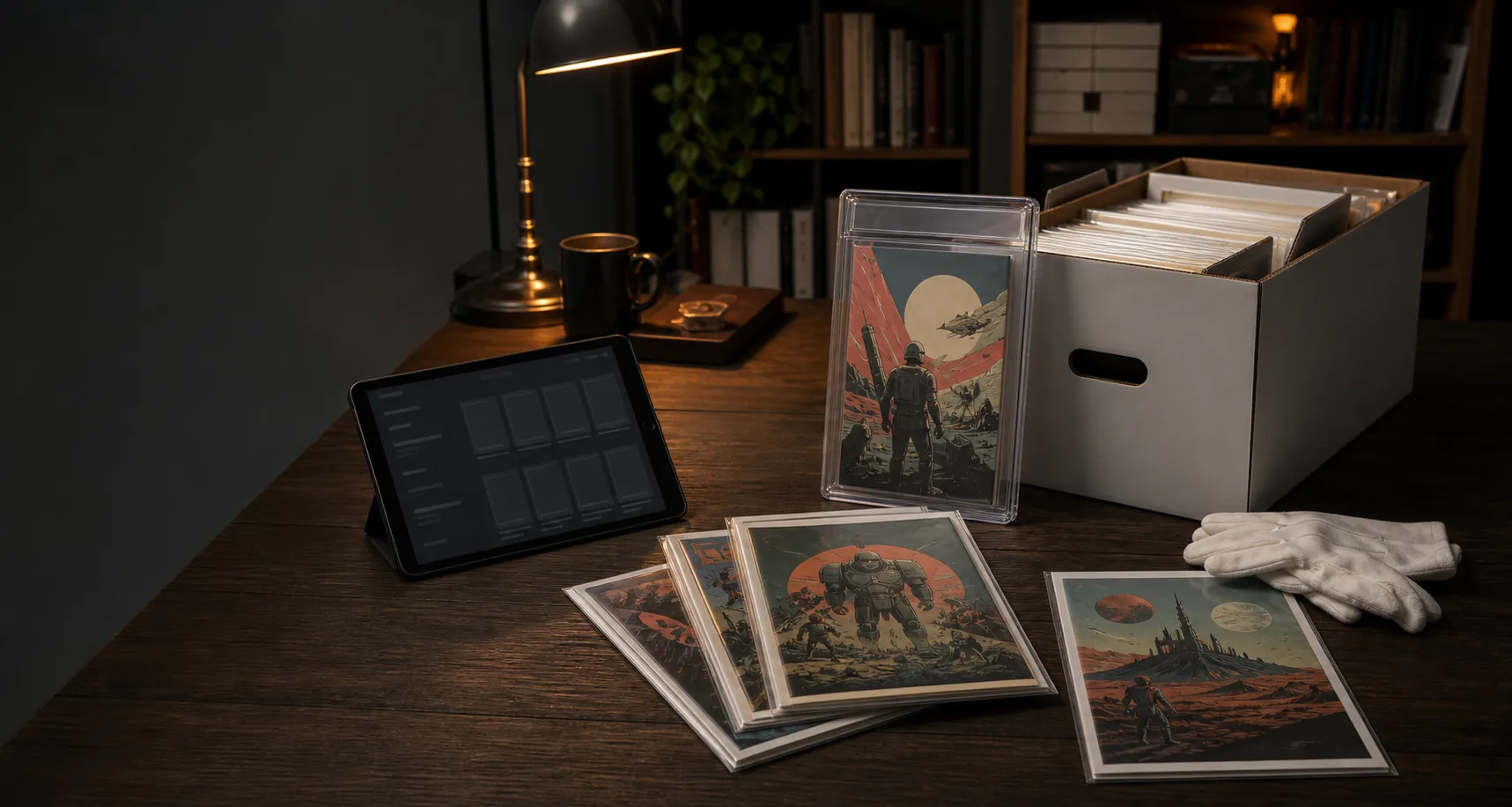
How to start collecting comic books
A focused collection is easier to enjoy, budget for, store, and complete than a pile of purchases driven by hype.
- Pick a focus: Choose a character, creator, title run, era, publisher, cover artist, or story type that genuinely holds your interest.
- Set a budget: Decide on a monthly purchase amount and leave room for supplies, shipping, insurance, and occasional upgrades.
- Learn the identifiers: Confirm the title, issue number, publication date, printing, variant, and any inserts before comparing prices.
- Start with accessible copies: Reading copies and affordable raw books teach you more than chasing an expensive slab before you know your taste.
- Buy from accountable sellers: Look for clear photos, accurate descriptions, return terms, and an established reputation.
- Record every purchase: Capture what you bought, what you paid, where it is stored, and the evidence supporting its identity and condition.
Begin with books you would still be glad to own if their market price never changed.
What makes a comic book valuable?
Value is copy-specific. Two examples of the same issue can sell for very different amounts because grade, page quality, restoration, signatures, and provenance change buyer confidence.
Historical significance commonly includes first appearances, origin stories, first solo titles, landmark transformations, iconic covers, and culturally important creative work. Significance is strongest when collectors have cared about it across several market cycles.
Page quality matters even when two books share a numerical grade. Certification labels may distinguish white, off-white, cream, tan, or brittle pages, and buyers can price those copies differently.
Scarcity
Supply can be limited by original distribution, survival rate, variant production, or certified population. Common mistake: Treating a grading-company population report as the total number of surviving copies.
Condition
Wear, tears, staining, missing pieces, fading, centering, and page quality directly affect desirability. Common mistake: Assigning a precise grade from one front-cover photo.
Demand
Important characters, creators, covers, and stories attract deeper pools of buyers. Common mistake: Confusing a temporary announcement spike with durable demand.
Significance
First appearances, origins, landmark stories, and historically important creators can sustain interest. Common mistake: Assuming every advertised key has equal cultural importance.
Trust
Accurate identification, disclosed restoration, provenance, certification, and comparable sales reduce uncertainty. Common mistake: Using optimistic asking prices instead of completed, like-for-like sales.
Choose a collecting strategy
There is no single correct collection. A useful strategy gives your buying decisions a consistent reason.
Character or creator
Follow appearances or work that has personal meaning. This is flexible and naturally resistant to trend chasing.
Runs and sets
Build a complete title, story arc, publisher set, or cover-artist set. Completion and curation are the reward.
Key issues
Focus on first appearances, origins, team formations, major events, or landmark covers. Verify why each book is considered a key.
Reader copies
Prioritize affordable, enjoyable copies you can handle and read without worrying about every small defect.
High grade
Pursue exceptional condition and presentation. Small grade differences can create large premiums, especially for modern books.
Blue-chip books
Seek historically important comics with established demand. Entry costs, transaction fees, insurance, and restoration risk are substantial.
Comic book grading explained
Third-party grading standardizes a condition opinion, checks for restoration or alteration, and places the comic in a tamper-evident holder. It can reduce transaction uncertainty, but it does not guarantee authenticity of every claim or future value.
A raw comic remains directly accessible. A graded comic is encapsulated with a numerical grade and label information. The right choice depends on the book, your goals, the expected grade, and the full cost of submission.
Pressing can reduce certain non-color-breaking bends, rippling, or impressions. It generally cannot repair tears, missing paper, stains, fading, ink loss, or brittle pages. Restoration can add, replace, reinforce, clean, or alter material and must be disclosed.
Witnessed signatures have a documented chain of custody. Previously unwitnessed signatures may be authenticated after the fact, but those are different standards and should be described accurately.
- The comic is historically important or already valuable.
- A likely grade would create a meaningful premium over the raw value.
- Restoration detection or signature authentication would materially improve trust.
- You expect to sell online, insure the copy, or preserve it encapsulated long term.
- The estimated upside comfortably exceeds grading, pressing, shipping, insurance, and selling costs.
What AI-assisted condition estimates can tell you · Document condition and certified grades
Storage and preservation
Stable conditions and chemically sound materials do more for a collection than elaborate display systems.
The Library of Congress recommends a cool, relatively dry environment with minimal light exposure and distance from radiators and vents. NEDCC provides broader preservation guidance for paper collections and emphasizes environmental stability.
Products labeled “archival” are not automatically equal. Evaluate the material, dimensions, and manufacturer guidance rather than relying on the marketing term alone.
- Store comics in a cool, relatively dry, stable environment.
- Use properly sized, chemically stable sleeves, backing boards, folders, and boxes.
- Keep boxes supported, upright, and full enough to prevent slumping without crushing books.
- Handle books with clean, dry hands on a clear surface.
- Inspect periodically for moisture, mold, pests, rust, warping, or enclosure wear.
- Direct sunlight and ultraviolet exposure
- Attics, damp basements, radiators, vents, and exterior-wall temperature swings
- PVC plastics and low-quality acidic paper products
- Overpacked boxes, tight bags, and unsupported leaning
- Water, smoke, food, and rough handling
How to organize and document a collection
A documented collection is easier to find, value, insure, sell, and transfer. Treat the record as part of the collectible's history.
- Title, issue number, publisher, and publication date
- Printing, edition, and variant
- Condition or certified grade and page quality
- Purchase price, purchase date, and seller
- Estimated value and valuation date
- Box, shelf, or storage location
- Certification number and grader
- Signature and restoration details
- Front, back, and notable-defect photographs
- Receipts, provenance notes, and insurance documents
Catalog a comic collection step by step · Track your collection with Comic Books Vault
Buy, sell, and avoid costly mistakes
Most preventable losses begin with incomplete identification, weak documentation, or a rushed response to hype.
- Comparing the wrong copies: Match issue, printing, variant, grade, page quality, restoration, signature status, and sale venue.
- Using asking prices: Completed transactions are stronger evidence than listings that may never sell.
- Ignoring total cost: Include buyer's premiums, platform fees, taxes, shipping, insurance, pressing, grading, and return risk.
- Buying from one photo: For valuable raw comics, request sharp front, back, spine, staple, centerfold, and defect images.
- Chasing announcements: Casting rumors, trailers, and publisher news can move demand quickly and reverse just as fast.
- Skipping return terms: Know what happens if the item is incomplete, restored, misidentified, or damaged in transit.
Are comic books a good investment?
Some comics appreciate significantly, but collectibles behave differently from diversified financial assets.
Comic books can be illiquid and expensive to transact. Their value depends on condition opinions, buyer tastes, cultural relevance, authenticity, storage, insurance, and the depth of demand for a specific copy.
A record price for one exceptional copy does not establish the value or future performance of ordinary copies. Treat headline sales as evidence about that transaction, not a promise about the category.
A resilient approach combines personal meaning with discipline: buy books you value, verify what they are, pay a defensible price, preserve them well, and keep accurate records.
Collectibles may have financial value, but they should not be presented as substitutes for a diversified financial plan.
Trusted tools and resources
- CGC grading scale — Grading standard
- CGC population report — Certified population data
- Library of Congress comic care guide — Preservation guidance
- NEDCC preservation leaflets — Paper conservation guidance
- Grand Comics Database — Issue identification
- GoCollect comics — Commercial market data
- Overstreet Access — Commercial price-guide tools
Comic collecting FAQ
How do I start collecting comic books?
Choose a character, creator, title, era, or story type you genuinely enjoy. Set a monthly budget, learn to identify printings and variants, begin with affordable copies, buy from reputable sellers, and record every purchase.
What comics should a beginner collect?
Start with comics you want to read or own, not whatever is receiving the most attention. Affordable runs, favorite-character issues, creator work, and lower-grade keys are good ways to learn without taking excessive financial risk.
How can I tell whether a comic is valuable?
Confirm the exact issue, printing, and variant, then evaluate condition, completeness, page quality, restoration, signatures, scarcity, and demand. Compare recent completed sales for truly similar copies rather than asking prices.
Should I get my comic graded?
Grading is most useful when the comic is valuable or historically important, restoration detection matters, certification will improve buyer confidence, or a likely grade creates enough premium to exceed every submission and selling cost.
What is the best way to store comic books?
Use properly sized, chemically stable enclosures and supportive boxes in a cool, relatively dry, dark, and stable environment. Avoid sunlight, water, attics, damp basements, vents, rapid temperature changes, PVC, and overpacking.
Are comic books a good investment?
Some appreciate, but comics carry liquidity, grading, restoration, fraud, damage, insurance, storage, fee, and taste risks. Buy with personal interest and disciplined pricing rather than treating comics as a replacement for diversified investments.
How do I organize a large comic collection?
Use consistent identifiers and storage locations. Record title, issue, publisher, printing, variant, condition, purchase details, value date, certification, restoration, images, and the exact box or shelf for every comic.
What is the difference between pressing and restoration?
Pressing uses controlled pressure, sometimes with heat or humidity, to reduce certain non-color-breaking defects without normally adding material. Restoration adds, replaces, reinforces, cleans, or alters material and can significantly change market treatment.